A Personal History of Racism
From Nursing Ethics, 1880s to the Present (p. 371-375)
Used by permission 2024 © Marsha Fowler
Chapter 11 Notes
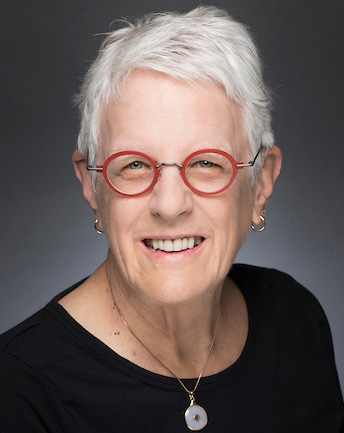
Like so many other nurses, I grew up in a white Christian family with a strong emphasis on the evils of all things labeled as a “sin.” Of course, the notion of “sin” is not unique to those who are born and raised “white,” nor is it limited to those who are raised “Christian.” But the conception of what is labeled as a “sin,” or even what is learned from birth as the difference between “right” and “wrong,” does have wide variations from family to family, from culture to culture, and even from nation to nation. In my upbringing, it was a sin, among many other things, to dance or to play cards—restrictions that puzzled me from an early period of my life and, of course, I learned to see in a different light as I became an adult!
My parents chose to become Baptist missionaries when I was in the second grade, and so our family traveled to Hilo, Hawaii, with the express purpose of bringing salvation to the “heathen.” My parents hailed from Georgia and Tennes- see, and never hesitated to convey in words and in actions their sense of superiority and “goodness” as the white missionaries, compared to the people of the town. There were no Hilo residents of African heritage in this predominantly Asian and mixed-race residents’ town, many of whom immigrated to support the growth of the sugar cane fields that surrounded the town. However, during our trips to visit relatives in the mainland every three years, my sister and I learned the horrendously evil ways of the segregated Jim Crow South. From my parents’ point of view, there was nothing odd, much less evil, about the way things were. When I questioned my parents as to why there were separate churches for black and white people, my mother’s answer was “because they [implicitly referring to black people] like it that way.”14 Even to my 11-year-old mind, this seemed like a woefully inadequate response, but I did not know how to take the matter further.
It was in this complex exposure to what we might now call “diversity” that my sister and I were immersed in learning about the world of “us” and “them.” Embedded in this was the notion of “good” and “evil.” We were the people of God, the good people. On the mainland, we were the white people who lived on one side of the town where things were organized in neat rows of well-to-do bungalows. In Hawaii, we were the haole (white) family who preached the gospel of Christianity to save the world; we were the good haole family, living in a Hilo neighborhood dominated by Japanese, Chinese, Filipino, Hawaiian, and mixed‑race families— people who needed to be “saved.” We grew up as residents of a magical tropical island nation. But we knew nothing of the invasion of the Islands by white mis- sionaries who brought salvation and stole the land, the economy, and dismantled the proud Hawaiian constitutional government. We knew of the influence of the white whalers who brought the carnal pleasures of sin to the Islands, but only as a matter of passing amusement.15
Every three years, we had the experience of visiting relatives in the southeast area of the US mainland, who lived in all-white neighborhoods with black families just blocks away in starkly contrasting communities of poverty, or very close to it. We learned, in the words and actions of our elders, that “those people” were not only “different” and “other”—they were viewed as lacking the character required to be in better situations; they were sinners—some of them worthy of being saved, but many simply not worthy of even that degree of concern.
As a child, I noticed the hypocrisies of pious white people who on Sunday claimed to love their neighbors, but who by Wednesday were embroiled in fright- ening domestic wars that left bruises and scars on the bodies of wives and little children. I noticed and wondered about the fact that all of the haole children, and the children of Chinese physicians and Japanese dentists, who even in the “melting pot” of Hawaii, were segregated in classrooms with fewer children, better books to read, and the ample supplies of art material that were lacking for children whose parents were laborers, store clerks, custodians—some Japanese but mostly Filipino, Portuguese, Hawaiian, and other Pacific Islanders.
What I did not notice until much later in adulthood was the fact that our grade-school curriculum only taught the history of Hawaii and the United States from the perspective of the white colonizers; we had no lessons about the Japanese and Chinese people who, in fact, were the majority of the population in our little town of Hilo. We learned to sing the beautiful Hawaiian songs composed by Queen Liliuokalani16 phonetically—we could sing and recite the Hawaiian words but were never taught the language.17 We did not know the meaning of the words we sang. We learned next to nothing about the Queen’s remarkable life, her worldwide influ- ence, her amazing majesty.18 We learned very little about the original inhabitants of the Islands other than the “reports” of the white missionaries and the explorer Captain James Cook19 who “discovered” the Islands in 1778. We learned nothing of the stories of the European whalers who, about 40 years after Cook’s first visit, began to have a significant influence as biological fathers of many and, for some, fathers who integrated as members of Hawaiian families.20
Consider the fact that my family arrived in the Islands in 1949—just 52 short years after Liliuokalani’s government was overthrown, and the US government seized control of the Islands. I, along with three other haole kids with US mainland roots and over 30 Asian kids with Japanese, Chinese, Filipino, and Hawaiian roots, learned nothing of this history. We learned to feel pride in reciting the pledge of allegiance to the US flag every morning at the start of the school day. There was barely any mention in all of grade-school as to how we came to be reciting that particular pledge, much less the erasure of the family and cultural histories that unfolded during those 52 years that formed who we were as 1st, 2nd, 3rd, 4th, 5th, and 6th graders, typically between the ages of 5 and 11.
Top all of this off with one other fact: none of our teachers in those grades were from the US mainland, nor were they haole. Yet the curriculum they taught was exactly what most mainland elementary schools were teaching. They were “local” women, mostly of Chinese, Japanese or mixed‑race heritage. One or two teachers in the school had haole names due to marriage to a mainland haole man. I presume now that most of them had earned their teaching credentials from the University of Hawaii in Honolulu—the only location at the time that offered education degrees. A few might have attended mainland (mostly California) colleges because of spouses who enrolled in professional degree programs not available in the Islands at the time (medicine, dentistry, law). What they learned in becoming teachers also, in all likelihood, had no content related to their own histories or the histories of their people.
Recalling now the impressions I formed growing up, I am appalled and deeply offended. It has taken a lifetime for me to tap into the evil that is racism. In my childhood experience, there were no discussions of racism, even though the civil rights movement was beginning to stir on the mainland—a fact we never even learned about. In the Islands, we often spoke of the “melting pot” of Hawaii, where presumably there was no discrimination—despite the very visible and obvious fact that people of Hawaiian heritage were isolated in relatively rural, poverty-ridden towns where there were essentially no employment opportunities and the regional high schools were out of reach for many of the teens in the area. Most of the professional people in the larger towns and the city of Honolulu were predominantly Chinese, along with the minority well-to-do haoles; the grocery and retail industry was dominated by Japanese people. School segregation was institutionalized in the heritage of two prominent private schools in Honolulu. In 1842, the missionaries established Punahou School for their children21—a school that still allowed only a 10 percent “quota” of non‑haole children when my son’s father was admitted to kindergarten a century later in 1942.22 In 1882, a comparable private school—Kamehameha School—was established for boys of Hawaiian heritage, with girls admitted seven years later.23 When I entered the public Riverside School in Hilo, I went to the “English Standard School” for children who could speak “proper” English, located across the street from the “other” school for children who did not speak much English, or who spoke “pidgin” English (regardless of their actual academic ability).
It was not until I was in my 30s, living in Buffalo, New York, that I began to consider the very real dynamics of discrimination and disadvantage based on the social construction we know as “race.” My personal history growing up in Hawaii and marrying into a Chinese/Hawaiian family was a unique background, but it did not give me any special insights related to racism, and in fact instead ingrained in me the assumption that a person’s skin color (or race) does not matter. And it did not prepare me for life in a large northeast working-class city segregated into residential and social black/white neighborhoods. I became a member of a collective of progressive white women who were connected to the Women’s Studies program at SUNY-Buffalo and who established and ran Emma: Buffalo women’s bookstore. We talked about race and racism, and we held community programs featuring women of color who authored foundational feminist literature on racism, history, and experience of people of color. Yet our collective remained all white, a fact that we failed to confront throughout the ten-year life of the collective.
This fundamental, visible, and glaringly obvious fact of unquestioned and unexamined segregated whiteness is not unusual. It is, in fact, the profile of nursing as a profession. I, along with all of my white colleagues over my long career, have simply taken this fact for granted. Yes, we engage in bemoaning the lack of diversity in nursing, but without motivation to seriously question why this is the case. We have failed to face this fact as the ethical/moral issue that it is. Our failure contributes to and perpetrates the unjust inequities that render disadvantage for many, including a significant number of people of color, and secures advantage for the relatively few—mostly those who are white.
The pillars that support this injustice include: 1) individual racist attitudes and actions, 2) institutional policies that normalize continued discriminatory practices, and 3) persistence of social/political norms that sustain white privilege. It is time for white nurses to recognize that it is a fundamental responsibility of white people to resist and dismantle each of these pillars. Lectures, training seminars, and book clubs are the dominant “go‑to” approaches to do so, but these efforts have very limited potential. It is time to leave the passive spaces of listening to admonitions about racism, and become active participants as anti-racist citizens. There are doable actions that I believe white nurses must engage in if we seek justice and intend to resist and dismantle the status quo; here is a basic overview of what is possible.
Make a personal, conscious decision to become anti-racist, and become well-informed with both depth and breadth of understanding. It all starts with your own decision and commitment. Educate yourself by reading and discussing the abundant ideas that are now on the web and in books and journal articles. Write your own “accountability statement” to clarify and codify your commitment. Find an “affinity group” to build support for one another’s commitment to become anti‑racist. You can refer to the “Overdue Reckoning on Racism in Nursing”24 project in forming your own course of action.25 In particular, our “Principles of Reckoning” provide a roadmap for what we believe to be meaningful action. We also provide a rich list of resources26—books, articles, webinars, and other resources that you can tap into.
Form partnerships between white nurses and nurses of color actively engaged in challenging racist policies and practices, with meaningful personal and interpersonal relationships between people of color and white people. Read and cite nursing literature by nurses of color, and connect with the authors to learn more about their work. Form actions together with nurses of color around health-care concerns that you share in common. Go to places and spaces where nurses and other people of color are engaged, and learn to take their lead as you become part of a community. Robin DiAngelo provides a brilliant explanation of what this means in her “Accountability Statement”:
Building relationships across race will require most white people to get out of their comfort zones and put themselves in new and unfamiliar environments. This is different from our usual approach in which we invite Black, Indigenous and Peoples of Color into committees, boards, and places of worship—groups white people already control. We often do this when we have done no work to expand our own consciousness and developed no skill or strategy in navigating race. In effect we are inviting Black, Indigenous, and Peoples of Color into hostile water, then we are dismayed and confused when they choose to leave.27
Build platforms that center voices of nurses of color, with visible evidence that these voices are being recognized and followed. Understand that white privilege typically is seriously misused. Indeed, white privilege exists and cannot be denied, but it can be used to end racism. Rather than decry or, worse yet, deny the privilege of being white, white people can make conscious choices to use privilege in ways that begin processes of change. One approach is to restructure and remake spaces and places where change is possible—where white voices have typically domi- nated and prevailed. Examine each of the spaces in which you live and work, and start making change in even the smallest of ways, with the intent to build inclusive policies and practices. Follow through in ways that are not simply inclusive in the sense of being present, but inclusive of active leadership and participation. When you are planning a program, or an event, or even a single class lecture or learning activity, seek the leadership of people of color. Together, build in the visibility of nurses of color and assure that their voices are heard. Learn about barriers that in the past have excluded nurses of color, and join with nurses of color to seek to dismantle those barriers. Retain a strong dose of humility in doing this work; when you falter, acknowledge what happens and get to work to change what happens in the future.
There is no universal “how to” in overcoming racism. But this is not simply an academic project. Becoming anti-racist requires action. It is possible, indeed it is imperative, to forge our own paths in the direction of ending racism. The actions you take, and how you take action, must be your own creation. If we all do whatever we can do to resist and dismantle racism, I believe we will make significant change!